
Urban Greening
What is urban greening?
Urban greening enhances cities for both people and wildlife, creating healthier, more attractive and climate-resilient places. It involves retaining and planting trees, shrubs and understorey vegetation to increase nature in urban areas, provide shade and UV protection and strengthen biodiversity. A healthy urban forest is a vital community, environmental and economic asset.
The City of South Perth's urban forest
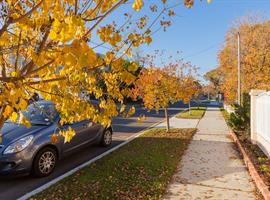
The City of South Perth is renowned for its tree-lined streets and green spaces, with around one-third of the area (709 hectares) covered by vegetation. This includes 391 hectares of reserves, 14 designated nature spaces and over 21,000 street trees. Nearly 400 hectares of urban forest exist across public and private land, complemented by more than 100 hectares of natural areas with significant tree cover.
Our strategy
Shaped by extensive input and collaboration with the community, the City of South Perth’s Urban Greening Strategy (the Strategy) was adopted by Council at the July 2025 Ordinary Council Meeting, replacing the Urban Forest Strategy 2018-2023. It expands the City's environmental focus to encompass all forms of nature and biodiversity.
The Strategy is guided by four key pillars: Protect, Enhance, Manage, Connect and Support. Each pillar includes goals and objectives to inform action, investment and future planning. It builds on previous strategies while addressing a wide range of initiatives, including green corridors, urban parks and foreshores, community education and incentives, policy and advocacy efforts and sustainable funding mechanisms, with the aim of creating a greener, cooler, and more liveable City for generations to come.

Benefits of urban greening
Greening contributes to the health of the residents, the environment and the economy. Key benefits include:
- Cooler streets and reduced heat
- Cleaner air and improved public health
- Reduced wind speeds and increased carbon sequestration
- More habitat and greater biodiversity
- Lower stormwater runoff and energy costs
- Improved liveability, more attractive neighbourhoods and higher property values.
Challenges for the urban forest
Like many cities in Australia and around the world, the City of South Perth’s urban forest faces growing pressure from development, population growth and climate change. As Perth has expanded, native vegetation has been lost, and while canopy cover has increased on public land over the past 30 years, it has declined on private property. Key threats include subdivision, tree vandalism, infrastructure works, ageing trees, water availability and community perception.
How the City protects its urban forest
The City manages more than 26,000 trees across bushland and foreshore reserves and runs a long-standing tree planting program that has helped maintain overall canopy cover. To protect and strengthen the urban forest, the City:
- Plants trees on streets, verges, parks, bushland and foreshore reserves
- Provides free trees to new residents at Citizenship ceremonies
- Propagates native species for use within the City and for supply to local governments
Goals for 2025-2050
- Protect the City’s ecologically sensitive riverside environment as a community asset.
- Safeguard the City's vegetation, mature and newly planted trees and green spaces, including bushland and remnant areas
- Strengthen the role of the community and stakeholders as caretakers of local ecological systems.
- Expand urban greening across the City to improve the environment and community wellbeing.
- Incorporate innovative, nature-positive design into City projects and public spaces.
- Achieve long-term greening outcomes by ensuring the City has the right people, funding and practices in place to manage and maintain its urban forest.
- Build strong partnerships and work collaboratively with stakeholders to protect, enhance and manage urban greening.
- Demonstrate leadership by supporting education, awareness and best practice in urban greening.
- Foster a community that is connected, engaged and proud to take ownership of urban greening in the City.
How you can support urban greening in the City
- Request a street tree be planted on your verge
- Preserve existing and plant more trees on private property
- Report illegal tree pruning and removal
- Obtain development approval for any damaging activities to a Regulated tree on private property
- Attend community planting days